In modern food packaging lines, the integration of accumulation systems serves a clear purpose: improving overall efficiency by reducing machine downtime and ensuring production continuity, even during short micro-stops.
However, when dealing with high-speed lines, such as those used in snack production, accumulation design requires a more structured and thoughtful approach. It is often tempting to manage the entire line through a single buffer positioned upstream of the primary packaging area. From a theoretical and economic perspective, this may appear to be an efficient solution, but in practice it can become a critical bottleneck, especially when multiple packaging stages are located downstream.
Snack production lines typically include product distribution into multiple lanes, followed by flow wrapping, tray loading, secondary packaging, case packing and palletising. When only one accumulation unit is installed, every downstream micro-stop places additional stress on the initial buffer. Upon restart, all upstream machines are then required to increase their speed, often by 10–20%. to compensate for lost production, resulting in increased wear, instability and a higher risk of cascading stops.
Accumulation across several stages
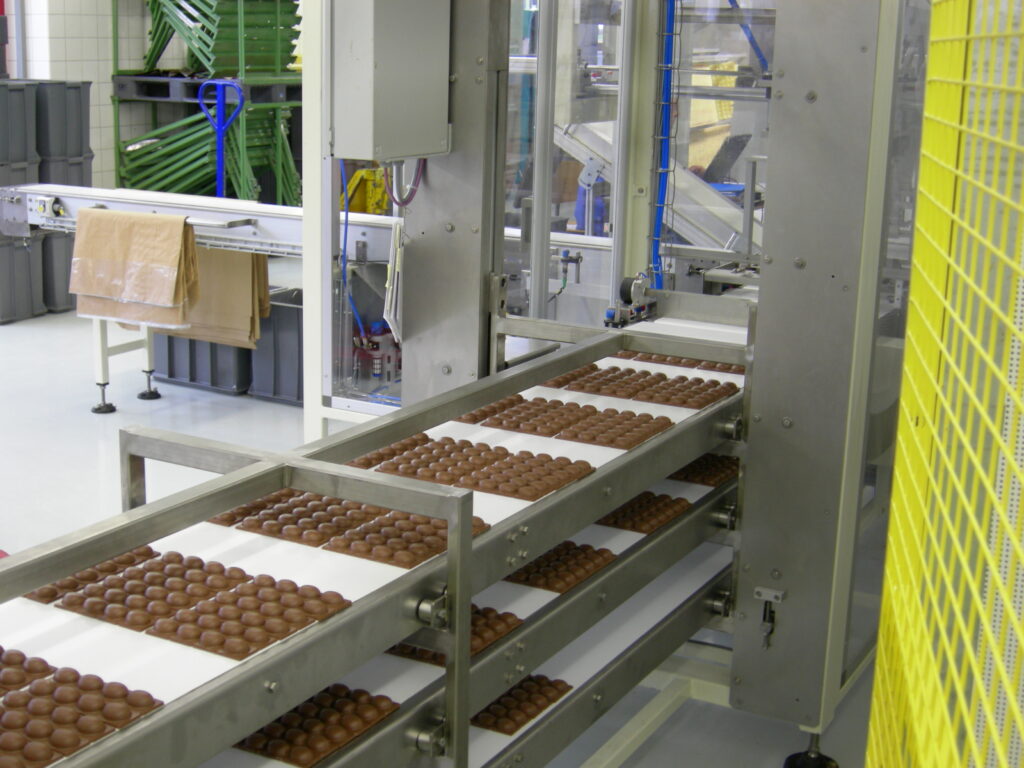
A more robust strategy involves distributing accumulation across several stages, each designed according to product characteristics, line speed and recovery logic. For the initial phase, M.H. Material Handling proposes FIFO multi-layer belt systems, developed to manage micro-stops in primary processing machines. At this stage the product is still unpackaged, and the system ensures order, traceability and flexibility within compact layouts.
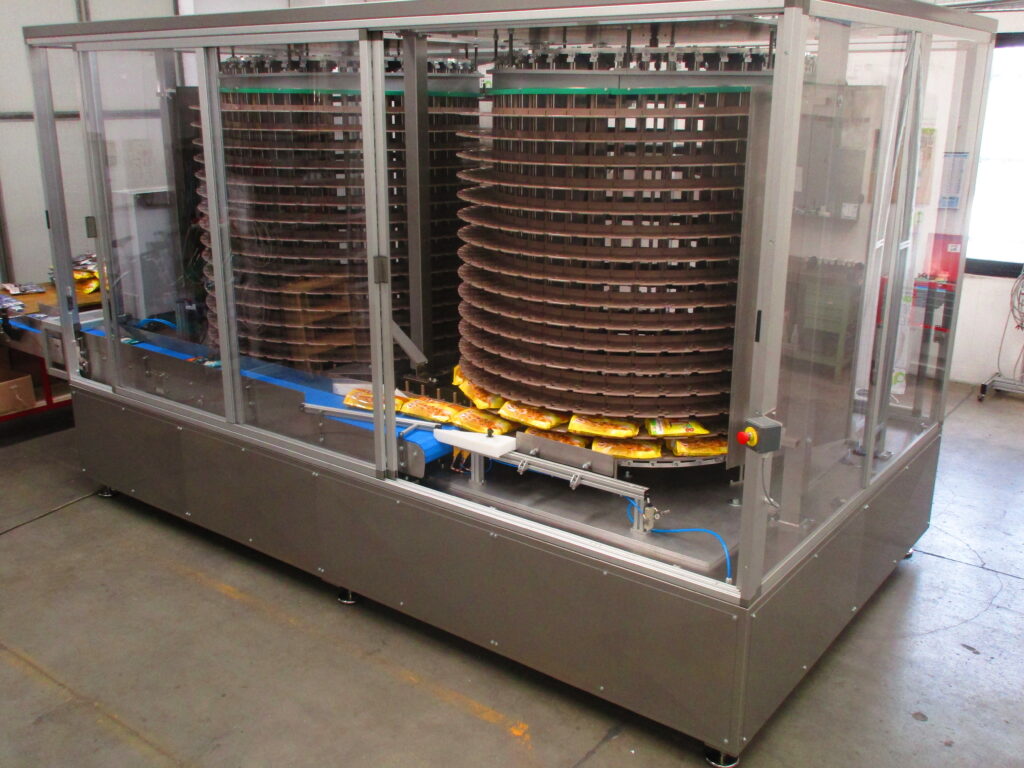
In the final section of the line, where products are already packed into trays, a HELIFLEX spiral system operating with LIFO logic is applied. Here, line speeds are lower, the risk of product damage is reduced, and accumulation can occur with slight pressure. The vertical development and compact footprint make this solution particularly suitable for facilities with limited floor space. Designing accumulation systems does not simply mean adding “buffer space” to a line.
It requires the development of a solution that is fully aligned with the production logic and capable of adapting to different operating conditions and product flows. Field experience shows us that each buffer is an integral part of the line and must be designed as such. A well-engineered multi-buffer configuration helps absorb load fluctuations, reduce waste, limit mechanical stress and, above all, prevent emergency interventions and unexpected downtime. The higher initial investment is more than offset by a more stable, durable and efficient line.