 Food labelling solutions no longer serve as mere conveyors of expiry dates and costs, but as advanced technological hubs that address three current issues: sustainable eco-design, safety and data interconnection.
Companies that need to code their products face numerous challenges in terms of productivity, and traditional high-quality coding and marking systems do not always provide the optimal results they seek. The adoption of linerless systems marks a turning point for industrial ecology. Unlike traditional solutions, which generate silicone waste that is difficult to dispose of, these labels work like a roll of adhesive tape in which the outer surface is designed not to adhere to the underlying layer.
The benefits are manifold: first and foremost, sustainability, as waste material (liner) is completely eliminated, but also efficiency, as each roll contains a greater number of labels, minimising interruptions for reel changes. Finally, communication: the format allows for ‘full wrap’ application, completely enveloping the packaging and offering more surface area for graphics and information. CIJ (Continuous Inkjet) technology remains the standard in the food industry due to its ability to adapt to different challenges.
As it is a non-contact marking system, it allows for precise printing on curved, soft or uneven surfaces, such as bottles and films. The use of food-grade certified inks , which dry instantly and withstand thermal stress such as pasteurisation, makes it ideal for the food & beverage sector. Laser marking is one of the preferred solutions for companies focusing on sustainability and precision. By eliminating the use of inks and solvents, this system engraves information directly onto the material (PET, cardboard or glass) through a thermal reaction.
In addition to the indelibility of the code, laser marking guarantees very low running costs and superior hygiene. It is also the technology behind Natural Branding, which allows information to be marked directly onto the skin of fruit and vegetables without damaging them. Thermal Transfer Overprinting (TTO) is the specific solution for plastic films and flexible packaging, such as pasta or snack bags. This technology is very precise and is chosen when millimetric definition is required, which is essential for making QR codes, dense barcodes and more detailed nutritional tables perfectly legible.
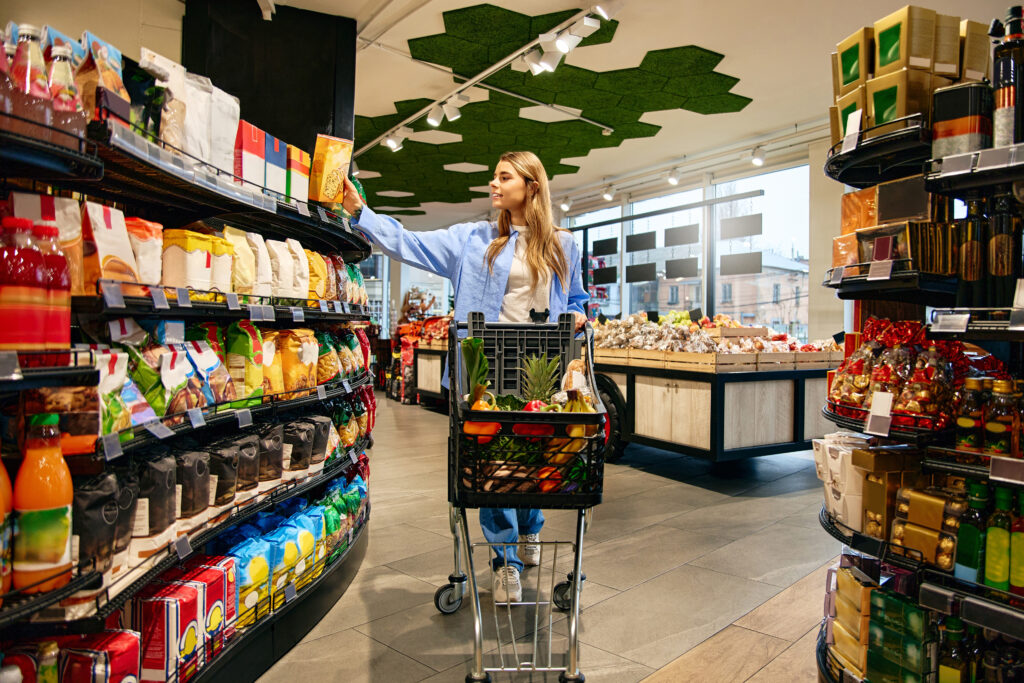
Focus on laser marking
Laser marking is a method of encoding the surface of products with 2D codes, barcodes, logos and legible characters to indicate production dates, expiry dates, serial numbers, etc. It is based on changes in the optical appearance caused on a surface by a laser beam. The energy of the laser beam can induce physical-chemical processes such as material ablation, metal melting, organic material carbonisation, pigment transformation, polymer expansion, surface structure generation and other processes.
Laser markers offer numerous advantages over other marking technologies. With proper laser system design, it is possible to change the optical appearance of a surface without compromising its integrity, ensuring that the information is highlighted and can be read correctly. Lasers can produce permanent markings on a wide range of materials, even if they are wet or rough, which is essential for monitoring traceability information. Laser marking requires no consumables, eliminating the high maintenance costs of ink coding systems while ensuring a cleaner working environment.
It can increase production line productivity compared to other methods, while requiring minimal maintenance, meaning that the coding process does not involve unnecessary downtime. In addition, this technology also offers great flexibility in terms of automation. Direct writing of digital patterns can be set up via computerised synchronisation of laser beam s and the printing surface. Furthermore, production lines typically require the printing of variable and unique product-dependent information with resolutions, speeds and print width values not covered by state-of-the-art marking technologies.
The advantages of laser marking cannot be achieved without a suitable marking method and control system. Since laser marking systems often need to be integrated into high-speed production lines, they must be carefully designed to avoid becoming a bottleneck in the system. Current technologies based on the sequential operation of a single laser beam cannot achieve the speeds of high-performance production lines. However, parallel processing of multiple laser beams can overcome these current speed limitations.
Laser engraving for fruit and vegetables
The food industry is highly interested in the traceability and tracking of food throughout the supply chain. Traceability information has a substantial impact on customer choices, with consumers willing to opt for better quality even at higher costs. Most fresh products, such as fruit and vegetables, are labelled with adhesive labels. In some cases, brand logos or barcodes are printed on the labels. However, all these adhesive labels can be easily counterfeited. In addition, most of these labels are made of plastic, a material that is harmful to the environment.
They may be derived from polymers made from fuel- d sources; as a result, harmful gases may be released into the atmosphere during the manufacturing process, contributing to an increased carbon footprint. In addition, adhesive gums may create secondary problems, such as label removal, gum sticking in packaging lines, and the need for special cleaning and maintenance. Radio frequency identification (RFID) tags can be used to obtain real-time information, but they are not cost-effective and require a separate mechanism for data retrieval.
There are a number of analytical techniques, including elemental analysis, high-performance liquid chromatography (HPLC), microsatellites (SSR), sequence-characterised amplified regions (SCAR), single nucleotide polymorphism (SNP) and real-time PCR, which are used to identify, quantify or characterise the components of a sample. However, they are expensive and not easily accessible. Laser engraving, on the other hand, provides high-quality, anti-counterfeiting and sustainable labelling. It operates at high speed and can offer long-term cost and production reduc .
Laser applications are gaining ground in the food industry, particularly for labelling, pre-treatment, cooking, microbial inactivation, drying, extraction, fermentation and curing of liquid foods. Laser engraving can be used to label the skins of various fruits, replacing plastic labels and ensuring sustainable and reliable traceability. Factors that would require optimisation are the input power, compressor pressure and marking speed of the laser engraving system.
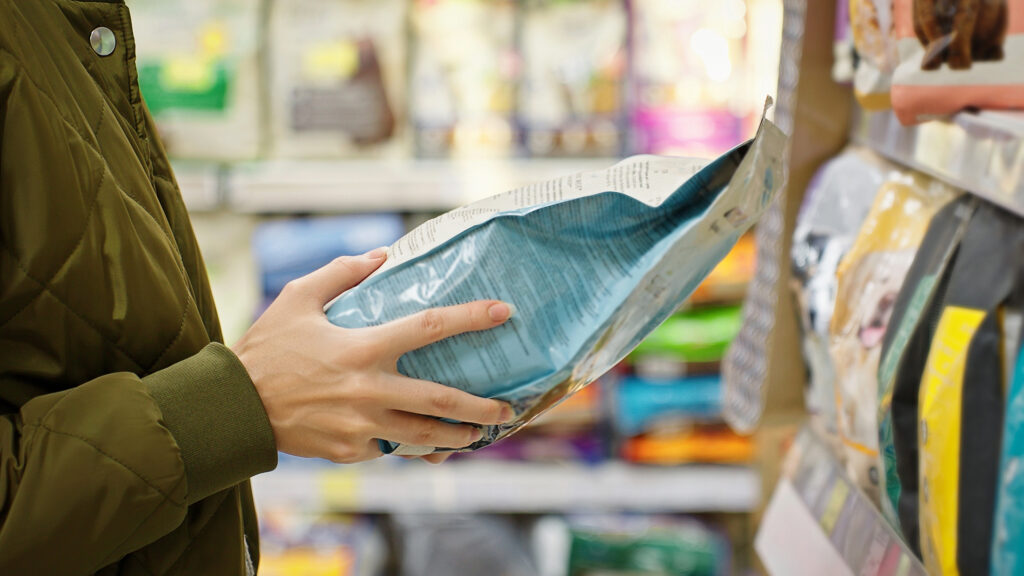
Smart labelling and dynamic QR codes
Today, we are seeing a transition from old linear barcodes to GS1 Digital Link systems. These identifiers serve a dual purpose: to transmit logistics specifications to distributors and to offer multimedia experiences to consumers, such as preparation methods, guaranteed traceability and recycling information. Smart labelling and dynamic QR codes contrast with traditional media. Unlike the latter, which is immutable (once printed, it remains fixed), these innovations establish an interactive link between the food product and a constantly updatable web portal.
Smart labelling is a network that uses electronic tools, such as RFID tags, NFC or reactive pigments, to enhance the functions of a standard label. Smart labelling includes informative and active packaging. The former focuses on messaging: it overcomes the size restrictions of packaging by offering videos on the supply chain, cooking tips, green certifications or instant health alerts. The latter integrates chemical or chromatic detectors that analyse the condition of the food, for example, in the event of a temperature change due to a break in the cold chain. Unlike static QR codes, which are linked to a unique address, adaptive codes operate via a pointing URL.
The information is flexible. It is possible to change the link destination even when the goods are already on the shop shelves. If a page expires or a new offer is to be launched, this can be done via the cloud without touching the label graphics. It also allows you to map who is scanning, when, where and what type of hardware is being used. All this information is useful for food companies to analyse purchasing habits. In the event of food risks, the brand activates an emergency signal that is only visible when scanning the packaging of that particular batch.
GS1 Digital Link is based on three pillars: manufacturer address, identification code (GTIN) and flexible details (batch or expiry date). The crucial component is the resolver, a server that analyses the scan and routes the user according to their identity. If the customer is acting, the system sends them to the allergen list, tutorials or ethical data; if the logistics operator intervenes, the resolver displays technical parameters or warehouse manuals; if it is the cash register terminal, the software extracts the GTIN for payment. In this way, GS1 Digital Link eliminates graphic clutter: no more separate barcodes, promotional QR codes and traceability, resulting in a cleaner layout. By 2027, GS1’s goal will be the universal adoption of 2D scanning in retail. This will enable, for example, the automatic application of discounts on items nearing their expiry date or the immediate blocking of a product if the batch is contaminated.
Regulatory and environmental challenges
Currently, the selection of the optimal coding system depends on critical variables such as line output, packaging material and environmental parameters (hygrometry, harsh temperatures, volatile contaminants). Recent EU regulations, primarily the PPWR (Packaging and Packaging Waste Regulation, EU 2025/40) relating to packaging, require transparent traceability regarding the recyclability of components.
The European PPWR Regulation, which came into force in 2025, with the first practical obligations applicable from 12 August 2026 concerning the ban on PFAS substances (so-called ‘forever pollutants’) in packaging in contact with food, and the label that must guarantee their absence, imposes strict standards for sustainable packaging, mandatory recyclability by 2030, and a 15% reduction in waste by 2040. The critical issue for companies is to convey this data in minimal surface areas while safeguarding production capacity. One solution is the implementation of synchronous artificial vision sensors that validate code integrity in fractions of a millisecond.
Marking in the food sector is shifting from a mere regulatory burden to a competitive lever for companies and consumer protection. Investing in digital and versatile architectures means not limiting oneself to mere printing, but consolidating a relationship of reliability with the end consumer. Food labelling solutions no longer serve as mere carriers of expiry dates and costs, but as advanced technological hubs that address three current issues: sustainable eco-design, safety and data interconnection.